miércoles, 13 de mayo de 2015

MOTIVATION

MOTIVATION


MASLOW’S HIERARCHY OF NEEDS.

The maslow's hierarchy of needs refers to a motivational theory that aims to understand the behavior of the human being in the laboral life. First we have to understand the theory is represented like a pyramid with 5 different levels, but this levels works like steps, once you accomplish the first one you can get the second one. According to Maslow, the first 4 levels are the most common ones, they always need to be fulfilled in order to ensure the stability of the worker, because if there is an absence of one of them, the worker will not feel complete and this will generate problems in his work life, at the same time that it will be impossible for him to reach the last level, the Self-Actualization.


  • Physiological needs: Are those needs just like the Air, Water, food, metabolic requirements, clothing and even sex among the other physiological needs.
  • Safety: This level aims for the mental health of the person, seeking for social safety or social stability, economical stability, job security, an environment free of violence, abuses, health and well-being.
  • Love and Belonging: The third level refers to the feelings of the worker, as a social being he needs to feel loved and belonged.  This level is complicated due to the impact of the childhood in the workers mind. Topics like friendship, Intimacy and Family are the main objectives to fulfill in this part of the pyramid.

  • Esteem: “All humans have the need to feel respected; this includes the need to have self-esteem and self-respect”. Wikipedia,2015. In this part the subjectivism plays a very important role, as the meaning of success is different each person, however according to the precepts that everybody has, this level should be accomplished in order to reach the following level.  Moreover this step need the presence of a balance between high and low levels of esteem, as it is not good to have extremes neither in high or low.

  • Self-Actualization: This level is the final one, and can only be reached when all the basis of the pyramid is done. Basically talks about the balance between the potential of a man and his accomplishments. Thus “What a man can be, he must be”. This is not only applied for the labor life, also for the personal life.  


Herzberg Theory

Herzberg.


This theory talks about two kinds of factors that are present in the motivation and demotivation of any person. But first we have to understand that the factor that discourages or Hygiene Factor are those that if they are not fulfilled generates demotivation but if they are fulfilled do not motivate. On the other hand, the motivational factors are those that aims to increase the motivation of the person, however if it is not present, does not mean that the person will be discouraged.
So as a conclusion, the Hygiene factors are needed to avoin demotivation and the Motivational Factors are needed to motivate.


Hygiene factor:

  • ·         Salary and benefits
  • ·         Company policy and organization
  • ·         Relationships with coworkers
  • ·         physical environment
  • ·         supervision
  • ·         status
  • ·         work safety
  • ·         growth
  • ·         maturity
  • ·         consolidation

Motivaton Factors
  • ·         Achievements
  • ·         recognition
  • ·         independence labor
  • ·         responsibility
  • ·         promotion


RESEARCH QUESTION:

How do you motivate a teenager? 

Now we have seen many theories about motivation in the work life, and in all of the cases there is a part where they point the importance of a personal motivation. In this case, I research how could parents motivate their teenagers in order to make them more proactive, with better self-steem and more happy?.


According to that, I found 6 steps that every parent should do in order to achieve those goals:

1) Always offer them your support: Teenager is not a child, in fact he is about to become an adult, and therefore he is looking for recognition and respect. Consequently, they are passing trhough some hard challenges and need to know they can trust in someone that will never leave them alone.

2)Expose them to ideological diversity: When you are in the process of growing up, you are constanly changing your mind, building it according your experiences, thoughts and feelings. However you as a parent need to open the world to them, showing them there are a lot of ideas and cultures all around the world, and the fact that they lives in determined neighbor, study in determined school and society, does not mean that they should follow the pattern, as everybody was born to be happy, they should have the tools to decide what makes them happy.

3)Motivate them in their studies: How many people have to wake up every morning to go to a work that they dont like and dont enjoy just because their parents thought that it was the best for him? Is that happiness?. It is a very difficult question, because of the points of view, however I consider that you will be succesful if you love what you do, because the source of the ideas comes from the passion and if you dont feel passion, you will never come up with an outstanding idea.

4)Teach them the value of responsability: It is very romantic to think you will always live with your parents, however the reality is that in most of the cases the people is starting to leave their homes even earlier than before, just looking to fulfill their own interest. Consequently it is very important to teach your children from the beginning to be responsible and to understand the consequences of their actions, thus they will become into a conscious adult that will probably commit less mistakes.

5) Guide the teenager to find their goals: Everybody should have a goal in his life, even if it is not the same as the rest of the people, because we as humans are constantly looking for the meanings of our lives and therefore it is important to find our goals and try to achieve them. For me, the most important goal that any person should have is to be happy, and it should not be seen as something you finally get, it should be a daily reallity.

6) Help them to became managers of their time: Everytime we became older, we are acquiring new responsabilities, new tasks and less time for us. That is why it is important to teach them how to manage well their time, In order to make them conscious about the importance of the free time they should dedicate to them and the importance of the time they should invest in their future work life.


BIBLIOGRAPHY 

http://upload.wikimedia.org/wikipedia/commons/thumb/3/33/MaslowsHierarchyOfNeeds.svg/2000px-MaslowsHierarchyOfNeeds.svg.png
https://wikispaces.psu.edu/download/attachments/41095621/Herzberg%201.jpg?version=1&modificationDate=1269485337000&api=v2
https://arc.library.carleton.ca/sites/default/files/Herzberg2.jpg
http://www.grupomiradio.mx/portal/wp-content/uploads/2013/12/Padre-e-hijo.jpg
http://adolescentes.euroresidentes.com/2011/01/como-motivar-los-adolescentes.html

ITALIAN CULTURE.

ITALIAN CULTURE.

ITALIAN OPERA

Which one is the metaphor for Italia and why is it important?


The metaphor for Italia is the Italian Opera. Italia is one of the youngest countries under the concept of Nation, only Germany is younger, however Italy is full of history and future.
We all know about the romantic view about Italy, however Italy also has serious problems in many aspects such as in the economy, internal divisions and high levels of corruption.
This has led the Italian society to “divide” in “two countries”, the North Italy and the South Italy. Therefore Separatist movements have argued that the North Italy should be an apart country from the South due to their economical autonomy, as they are the Industrial part of Italy and consequently the most important taxes contributors. On the other hand we have the Romantic south of Italy, where the corruption make serious problems in the institutions and culture, nevertheless, both parties (North and South) complement each other, as the labor hand of the North comes from the workers of the South. Thus, generating a good balance that benefits both of them.


Which characteristics are important for us to understand the Italian Metaphor?


OVERTURE:

The overture in the opera refers to the initial part when the principal characters indicates the idea of what to expect. This is very important for the Italian culture, as they see the overture as a very important aspect in their life. For instance, the overture at the time to establish a negotiation is very representative for them, as they need to understand and know a little bit more of the other part before they close any deal. We could say that they could be in the middle point between the Americans and the Asian culture, as the Americans go directly to the main point of the conversation or negotiation and the Asian because they really need to know the counter part as a human before they take any decision. However it also depends on the region, as the north is more likely to the American culture while the south likes a bigger overture.


PAGEANTRY AND SPECTACLE:

Once the curtains go up, the show starts with a stunning set, the idea is that everybody be fascinated with the show and could perceive how wonderful the Opera is. By large same happens with the concepts of life and territory for the Italians. Italians tend to be very emotive and expressive, and the idea to incorporate the Pageantry and spectacle to the daily life is because they want to make life easier in a more acceptable and emotive way.

There are two concepts we need to understand first, the Garbo and the Bella Figura:
The Garbo: “Deal with situations delicately and without offense”. Due to the Italian humor, this  is a very important characteristic in their conversation style, as they use to express their feelings and thoughts very openly, they also need the ability to say things without offending the other person and thus avoiding damaging relations.

La Bella Figura: “The art of public performance”. For this society, the image and the first impression is really important, that is why this concept appear in their culture and remains as one of the most important. For instance, an Italian would be willing to rent a very luxury car for only one afternoon in order to impress some people of a social club, even if he has to pay it during a whole year.

VOICE:

The voice in the Opera refers to the language in the Italian culture, thus they perceive it as the most beautiful in the world. The language here is very emotive, just as Italians are, therefore it is full of passion, rhythm and tonality.

They also use a lot the hands movements and the gestures, just to make more accuracy the message at the same time they are used to use flattery and polite lies.


EXTERNALIZATION:

Here we are talking about the externalization of the feelings and thoughts, this is the opposite behavior to the British, as the British tend to be more controllers of their emotions.
Consequently, the drama comes as an important part of their daily life, this is why they use to meet everyday at the piazza which is located in the center of the city. There, they express all their feelings and what happened during the labor day, this is a very good space for them to meet old friends or to make new ones, as they don’t even have to organize the meeting because they already know that the others will be there just after work.

The drama is also present in every situation, for example in funerals, which is very particular as it is a situation commonly perceive as respectful and quiet. Moreover the family is also a very important part of the decision taking process for any Italian. They share everything with their family, and they need them to get their opinion, however the one that takes the final decision is the individual. This has become into a really difficulty for the Italian companies due to the confidential clauses, because as they need to share everything with their families, it is very hard to keep the secrets safe.

CHORUS AND SOLOISTS:

In the beginning only existed the chorus, however the director of the opera and the public saw the need of a main character in order to give more drama and emotions to the show, this is how the Soloist was born. Nowadays it is almost impossible to conceive an opera with out chorus and soloists. Same happens with the Italian society and its internal divisions, as they need each other to survive even though if they are quite different and in some aspects autonomous.


RESEARCH QUESTION

Mention some of the most important Italian characters in the history.
Casiodoro.

FAMOUS WRITERS 
  • ·         Casiodoro
  • ·         Petrarca
  • ·         Castiglione
  • ·         Maquiavel
  • ·         Boecio
  • ·         Símaco

FAMOUS SCHOOL AUTHORS.
  • ·         Magnus Felix Ennodius
  • ·         Arator
  • ·         Venancio Fortunato
  • ·         Felix  “The grammariar”
  • ·         Pedro de Pisa
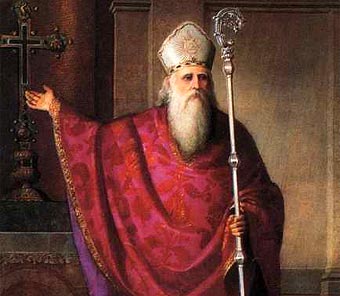
  • Venancio Fortunato.
  • ·         Paulino de Aquilea

HISTORIC CHARACTERS.
  • ·         Alessandro Volta (1745-1827), Lombardia
  • ·         Américo Vespucio (1454-1512), Florencia, Toscana
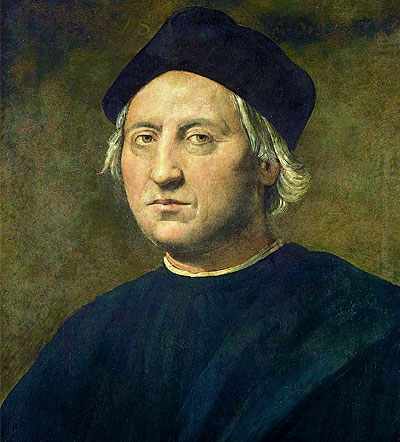
  • ·         Cristobal Colon (1451-1506), Génova, Linguria
  • ·         Dante Alighieri (1265-1321), Florencia, Toscana
  • ·         Donnatello (1386-1466), Florencia, Toscana
  • ·         Galileo Galilei (1564-1642), Florencia, Toscana
  • ·         Giacomo Puccini (1858-1924), Viareggio, Toscana
  • ·         Leonardo da Vinci (1452-1519), Vinci, Toscana.
  • ·         Miguel Angel (1475-1564), Florencia, Toscana.
  • Leonardo da Vinci.
  • ·         Vittorio Emanuele II  (1820-1878), Roma, Lacio.
Cristobal Colon.
Miguel Angel.


BIBLIOGRAPHY

https://sites.google.com/site/moltobeneitalia/personajes-importantes-de-italia
http://conoceitalia.blogspot.com/2012/03/personajes-historicos.html
http://www.biografias.es/pais/italy/
http://www.biografiasyvidas.com/biografia/f/fotos/fortunato_2.jpg
http://www.biografiasyvidas.com/biografia/l/fotos/leonardo_da_vinci.jpg
http://www.biografiasyvidas.com/biografia/c/fotos/colon_cristobal.jpg
http://sobreroma.com/wp-content/uploads/opera1.jpg
http://image.guardian.co.uk/sys-images/Music/Pix/pictures/2007/09/06/4pavarotti1.jpg

FRENCH CULTURE.

THE FRENCH CULTURE.


FRENCH METAPHOR:

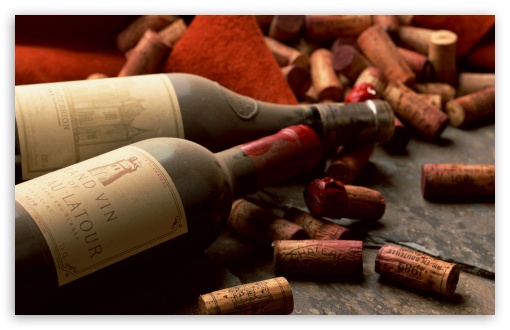
The French wine is recognized as one of the best, if it is not the best, of the world, therefore it plays a very important role in the French economy, traditions and even attitudes.
The French wine industry with over 5.000 varieties, represent also the diversity of the French citizens, as they are very particular but at the same time all of them share a culture that unifies the people and institutions.
Even though France has been the leader in sales of wine worldwide, governmental regulations have seriously harmed the wine industry, due to the fragmentation of the industry through the lack of support to the small companies and the Confusing and large number of categories that make the classification and the marketing positioning very hard.
Moreover the metaphor of the wine represents the French culture due to their perfectionism and the diversity implied in taste, thoughts and values.
 Old French Wine Bottles HD wallpaper for Standard 4:3 5:4 Fullscreen UXGA XGA SVGA QSXGA SXGA ; Wide 16:10 5:3 Widescreen WHXGA WQXGA WUXGA WXGA WGA ; HD 16:9 High Definition WQHD QWXGA 1080p 900p 720p QHD nHD ; Other 3:2 DVGA HVGA HQVGA devices ( Apple PowerBook G4 iPhone 4 3G 3GS iPod Touch ) ; Mobile VGA WVGA iPhone iPad PSP Phone - VGA QVGA Smartphone ( PocketPC GPS iPod Zune BlackBerry HTC Samsung LG Nokia Eten Asus ) WVGA WQVGA Smartphone ( HTC Samsung Sony Ericsson LG Vertu MIO ) HVGA Smartphone ( Apple iPhone iPod BlackBerry HTC Samsung Nokia ) Sony PSP Zune HD Zen ;


WHICH CHARACTERISTICS ARE IMPORTANT TO UNDERSTAND THE METAPHOR?

1)      Pureness: Every single step in the process of the production of wine is highly determining in some of its most important characteristics, such as the smell, the taste and the aroma. That is why they are very perfectionist and try to make the process a piece of art, considering that even 12 hours can affect all these process. Wine means for the French pride, patience, modesty, hospitality and perfection. This is very important because this is also how French see their country, perception that is also shared with the Americans, as both see their countries in a romantic view that displays perfection both in people and in the land.  But also having the position of Guardians of the Universal Values, as they perceive the French culture as the cradle of the freedom values.

2)      CLASSIFICATION: They love to classify, we can not only perceive it with the over 5.000 varieties of wine, but also in the French society where we can see the comparison between the wine categories and the social status.

3)      COMPOSITION: France represents history, present and future, even though some authors assure that they are polychromic, some others affirm that they are monochromic, same happens with the discussion if they are a high or a low context culture, but what is really true is the fact that they are very hard workers and they love to be recognized as leaders, even though if what they are leading is a small part of a company.Moreover they are very good conversation partners, as they see it as a process that requires all their attention and intellectuality. The conversation should be a perfect situation when both parts share their points of view, so as a conclusion they see it as a very important source of knowledge and therefore a possible source of money, as we saw it in the example of the cab driver in class.

4)      SUITABILITY:
“Certain wines marry certain foods”
The most meaningful moments in the French life are surround by food and wine, and as everything in France, this marry should also be perfect, so they spend hours matching the right combination of food with the exactly wine for the occasion. Same happens with the government, for instance, from 1872 to 1940 France had 102 different governments, while the US in the same period of time had only 14. This clearly show us how different is the hunger for the political participation. They are also proud of their 6 different political parties, as they see the abundant choices as the devotion to the individual freedom. Thus the politics are equal to passion.

5)      MATURATION:
Viticulturists strike for discipline, so does with their educational system. The children are sent to school at the age of 6, however it is not as the common educational system, for instance in Japan the kids are promoted automatically every year while in France the kids can only been promoted only when they accomplish certain skills required by the government. This educational system has made the French citizens very competitive at the point that if we compare them with the OCDE members, they occupy a favorable position.


RESEARCH QUESTION.

Mention some of the most important French characters.

HISTORIC  CHARACTERS:  
Juana de Arco (1412-1431)
  • Juana de Arco (1412-1431)
  • Napoleon Bonaparte (1769-1821)
  • Louis Philippe  (1773-1850)
  • Maréchal Foch (1851-1929)
  • Charles de Gaulle (1890-1970)
  • Marechal Leclerc (1902-1947)
  • MOST FAMOUS CIENTIFIC CHARACTERS:
  • Descartes (1596-1650)
  • Nicéphore Niepce (1765-1833)
  • Jean-François Champollion (1970-1832)
  • Louis Braile (1809-1852)
  • Louis Pasteur (1822-1895)
  • Clément Ader (1841-1925)
  • Pierre et Marie Curie (1859-1906 and 1867 -1934)
  • Louis and his brother Auguste Lumiére (1864-1948 and 1862-1954)

Napoleón Bonaparte (1769-1821)
FAMOUS FRENCH WRITERS
  • Francois Rabelais (1483/1494 – 1553)
  • Jean de la Fontaine (1621 – 1695)
  • Montesquieu (1689-1755)
  • Voltaire (1694-1778)
  • Jean-Jacques Rousseau (1712-1778)
  • Stendhal (1783-1842)
  • Honoré de Balzac (1799-1850)
  • Victor Hugo (1802-1885)
  • George Sand (1804-1876)
  • Jules Verne (1828-1905)
  • Alphonse Daudet (1840-1897)
  • Emile Zola (1840-1902)
  • Guy de Maupassant (1850-1893)
  • Arthur Rimbaud (1854-1891)
  • Marcel Proust (1871-1922)
  • Jean Cocteau (1889-1963)
  • Marcel Pagnol (1895-1974)
  • Montesquieu (1689-1755)
  • Jacques Prévert (1900-1977)

HISTORICHAL FRENCH PAINTERS.
  • Ingres (1780-1867)
  • Eugéne Delacroix (1798-1863)
  • Paul Cézanne (1839-1906)
  • Claude Monet (1840-1926)
  • Pierre Auguste Renoir (1841-1919)
  • Paul Gauguin (1848-1903)
  • Vincent Van Gogh (1853-1890)
FRENCH FAMOUS COMPOSERS
  • Berlioz (1803-1869)
  • Claude Debussy (1862-1918)
  • Ravel (1875-1937)

As a conlcusion of the most important characters of France in the history, we can see how many characters they have, thus becoming defenitely in one of the most important cultures in the world. Without doubt, they have contributed to the world history.


BIBLIOGRAPHY

http://es.rendezvousenfrance.com/es/informaci%C3%B3n/personajes-famosos-franceses

http://catalogo.artium.org/sites/default/files/imagenes/peliculas/Pasiondejuanadearco/la-pasion-de-juana-de-arco-016.jpg
http://upload.wikimedia.org/wikipedia/commons/thumb/5/50/Jacques-Louis_David_-_The_Emperor_Napoleon_in_His_Study_at_the_Tuileries_-_Google_Art_Project.jpg/275px-Jacques-Louis_David_-_The_Emperor_Napoleon_in_His_Study_at_the_Tuileries_-_Google_Art_Project.jpg
http://www.biografiasyvidas.com/biografia/m/fotos/montesquieu.jpg
http://wallpaperswide.com/old_french_wine_bottles-wallpapers.html